

Travertine Dining Tables in Singapore: Natural vs Sintered Stone
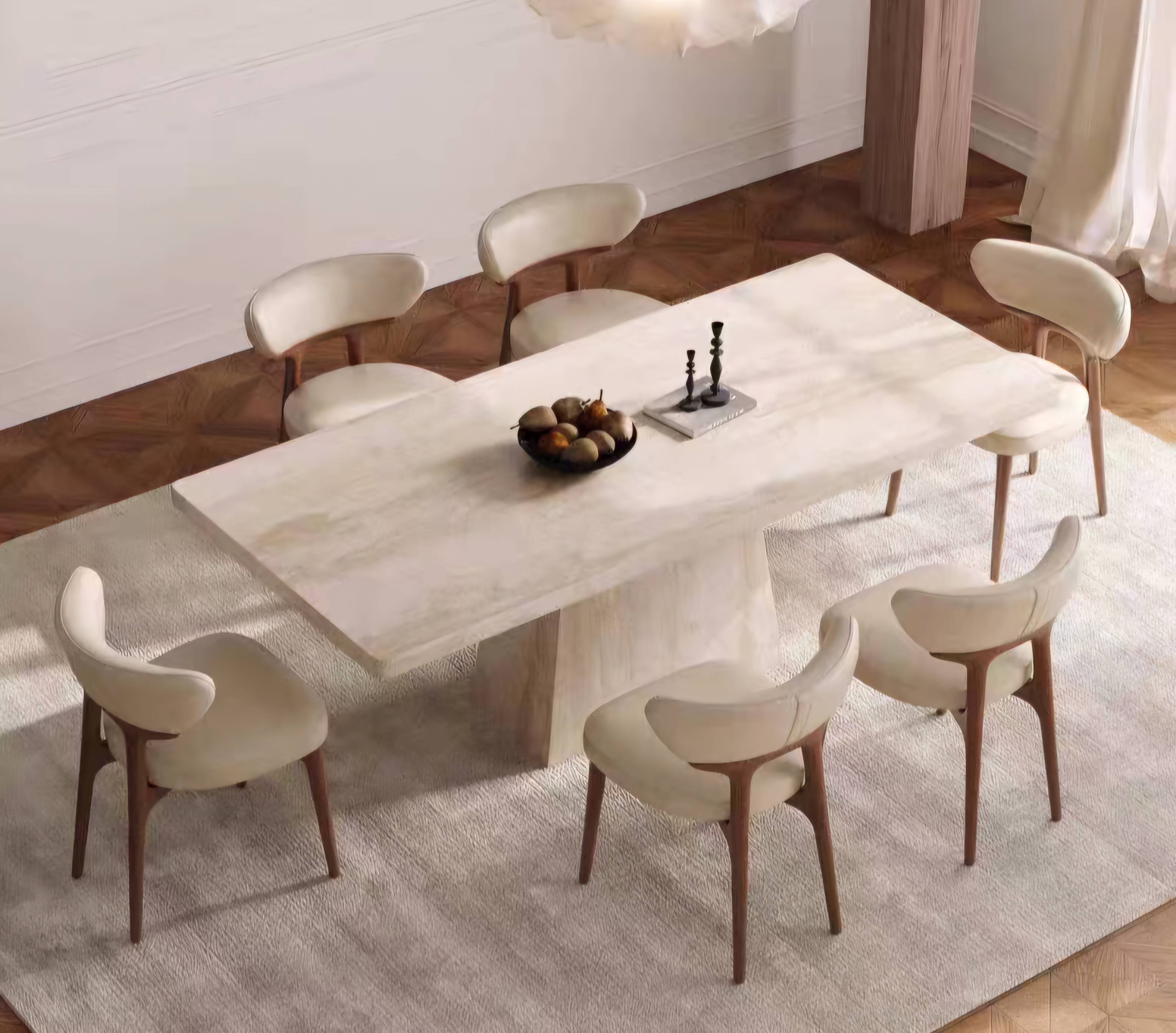
Search for a travertine dining table in Singapore and you will find two very different materials sold under the same word. Some tables are cut from natural travertine, a stone formed from mineral deposits over thousands of years. Others use sintered stone, an engineered surface printed and fired to look like travertine. They can look almost identical in a product photo, yet they behave differently the first time someone spills lime juice at dinner.
For a family eating at the same table every day, often in an open-plan HDB or condo dining area next to the kitchen, that difference matters more than the colour. This guide explains how each material behaves in a Singapore home, how to tell which one you are looking at, and how to size the table before you order.

Quick answer: natural travertine or sintered stone?
Choose natural travertine if you value real stone character and accept a little care: it reacts with acids such as citrus and vinegar, so wipe spills promptly and use placemats. Choose travertine-look sintered stone if the table sees heavy daily use, young children or frequent hosting, because it barely absorbs liquid and resists heat and stains with almost no maintenance.
What is natural travertine?
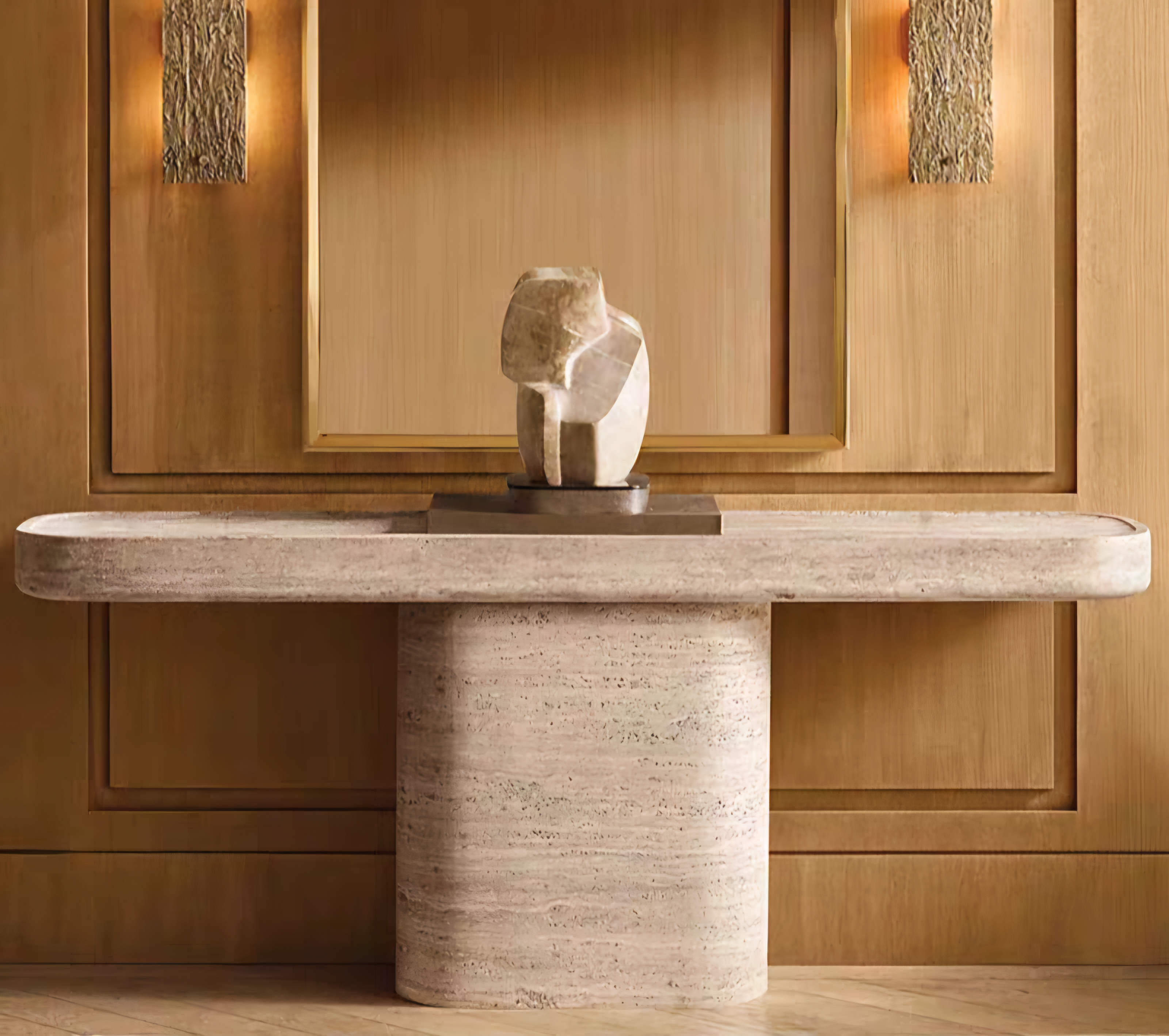
Travertine is a type of limestone. It forms when water rich in calcium carbonate, usually from hot or mineral springs, deposits layer upon layer of stone. Those layers create its soft banding, and trapped gas leaves small natural holes. On most furniture the holes are filled and the surface is honed to a smooth, matte finish.
Because travertine is almost entirely calcium carbonate, it reacts chemically with acids. Lemon, lime, vinegar, wine and some sauces can leave a dull, lighter mark called an etch. An etch is a change to the stone's surface rather than a stain sitting on top, so a sealer reduces staining but does not stop etching. A honed finish hides light etching much better than a polished one, which is one reason most travertine tables are sold honed.
None of this makes travertine a poor choice. It means you buy it knowing the surface will gather small marks over the years, much like a solid wood table gathers a patina.
What is travertine-look sintered stone?
Sintered stone is made by compressing natural minerals, such as clay, feldspar and silica, under intense heat and pressure until they fuse into a dense slab. It contains no resin binder. The travertine pattern is part of the surface design, so the look is consistent from one table to the next.
The dense structure is what makes it practical. Sintered stone absorbs very little water, so oil, chilli sauce and coffee generally wipe away. It handles heat well and is not affected by the household acids that etch travertine. Its weak point is the edge: the surface is very hard, and a hard knock on a corner can chip it. Rounded or eased corners reduce that risk.

How do the two compare in a Singapore home?
| Factor | Natural travertine | Travertine-look sintered stone |
|---|---|---|
| Appearance | Every slab is unique, with real depth, banding and filled pores | Consistent printed pattern; flatter on very close inspection |
| Acidic spills | Can etch; wipe promptly | Largely unaffected |
| Stains and oil | Porous; benefits from sealing and quick clean-up | Very low absorption; wipes clean |
| Hot pots | Use trivets | Heat-resistant; trivets still sensible |
| Weak point | Etching and staining | Chipping at edges and corners |
| Routine care | pH-neutral cleaner, coasters, periodic resealing | Damp cloth and mild detergent |
| Suits | Couples, smaller households, design-led homes | Families, frequent hosting, steamboat dinners |
Does Singapore's humidity affect a stone dining table?
Humidity matters far less for stone than for solid wood, which expands and contracts with moisture. The bigger daily factors in a Singapore home are what lands on the surface: condensation rings from iced drinks, sauces, and cleaning products. Natural travertine needs those kept in check; sintered stone mostly does not. If your dining area sits beside a window or open kitchen, either material is fine, but sintered stone asks less of you.
How can you tell which material a table uses?
The word "travertine" in a product name does not tell you. Check these instead:
- Read the materials line. On Urban Mood product pages, the materials line states "natural travertine" or "sintered stone" for each table.
- Look at the edge. Natural travertine shows its banding running through the thickness of the top. Sintered stone usually shows a plainer edge colour.
- Compare product photos of the same model. Natural stone varies between pieces; sintered patterns repeat.
- Ask before ordering. If the listing is unclear, message the retailer and ask for the material in writing.

What size travertine dining table fits an HDB or condo dining area?
Stone tables are heavy and, if made to order, harder to return, so measure before you choose. A widely used guideline is about 60cm of table edge per seated person, and about 90cm between the table edge and the nearest wall or cabinet so a chair can be pulled out comfortably.
A simple measuring checklist
- Measure the dining zone wall to wall, or to the edge of any walkway you need to keep clear.
- Subtract about 90cm on each side where chairs will sit. What remains is your maximum table size.
- Count daily diners, then allow about 60cm of edge each.
- Check the route in: lift door, main door and any tight corner in the corridor.
- Note the leg position. A pedestal or rounded table seats people more flexibly in tight spaces.
As a rough guide, a 120–130cm round table or a 140–160cm rectangular table suits four to six people in many BTO and resale dining areas. A round table also removes sharp corners, which helps in narrow spaces and around young children. If you need more seats only occasionally, an extendable dining table may suit you better; our guide to extendable furniture for HDB and condo homes covers how they work.
Urban Mood travertine dining tables to consider
These five are listed on our travertine dining table collection, grouped by material so you can compare like with like.
Natural travertine
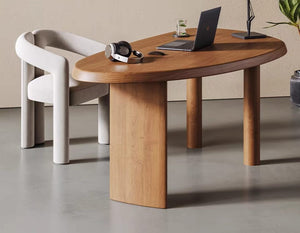
KARGL Japandi Travertine Dining Table has a natural travertine half-stadium top on solid ash wood legs. The rounded ends remove sharp corners, which makes it a sensible natural-stone option for families. Sizes run from 160cm to 200cm long, all 80cm wide, so it suits a dedicated dining area in a 4-room or 5-room flat or a condo.
LEMAY Wabi Sabi Travertine Dining Table is made from natural travertine throughout, with a stadium-shaped top and stone legs. It reads as a single sculptural piece and fits a wabi-sabi or warm minimalist interior. Size options include a 100cm version and 160cm and 180cm lengths. Expect it to be heavy, so confirm access before delivery.
Travertine-look sintered stone
ZENAR Modern Travertine Round Dining Table pairs a travertine-look sintered stone top with oak legs. Diameters run from 100cm to 150cm, and the larger sizes can be ordered with a turntable for shared dishes, which suits families who host steamboat dinners.
JERRO Japandi Travertine Dining Table has a sintered stone top in a travertine finish, black ash wood legs and rounded corners. At 80cm wide with lengths from 130cm to 180cm, it fits compact rectangular dining areas, and the dark legs work well in a Japandi scheme.
LOBOS Wabi Sabi Round Travertine Dining Table uses a warm travertine-finish sintered stone top on ash wood, in diameters from 100cm to 130cm. A 100cm or 110cm round suits a small BTO dining nook for two to four people.

How to care for a travertine dining table
Natural travertine
- Clean with a damp cloth and a pH-neutral stone cleaner. Avoid vinegar, lemon-based or bleach cleaners.
- Use coasters and placemats, especially for citrus drinks, wine and sauces.
- Wipe spills promptly rather than letting them sit.
- Ask your retailer how often the top should be resealed.
Sintered stone
- Wipe with a damp cloth and mild detergent.
- Protect the edges and corners from hard knocks, for example when moving chairs or the table.
- Use trivets out of habit, even though the surface handles heat well.
Whichever you choose, softer seating balances a stone top. Upholstered dining chairs in a textured fabric work well; our post on bouclé furniture explains why that fabric pairs so well with stone.
Frequently asked questions
Is travertine a good material for a dining table in Singapore?
Yes, if you accept some care. Natural travertine handles humidity well, but it reacts with acidic food and drink, so wipe spills quickly and use placemats. If you want the look without that care, choose travertine-look sintered stone.
Will lemon or vinegar damage a natural travertine table?
They can leave a dull etch mark because travertine is calcium carbonate, which reacts with acid. Sealing helps against staining but does not prevent etching. A honed finish makes light etching less noticeable.
Is sintered stone the same as travertine?
No. Sintered stone is an engineered material made from minerals fused under heat and pressure, with a travertine pattern on the surface. Natural travertine is quarried stone.
Can sintered stone chip?
It can, mainly at edges and corners after a hard impact. Tables with rounded or eased corners are less vulnerable.
Which is better for a family with young children?
Sintered stone is usually easier for busy families because it resists stains and etching. Look for rounded corners or a round top to reduce bumps.
How long does delivery take?
Many Urban Mood pieces are made to order. Our shipping policy estimates production at three to six weeks from payment, unless our team advises otherwise. See delivery and assembly charges for current details.
Choosing your table
Pick natural travertine for genuine stone character in a household that can live with a few marks. Pick travertine-look sintered stone for a low-maintenance surface that handles daily family meals. In both cases, measure first, allowing about 60cm per diner and about 90cm of clearance for chairs, and confirm the material on the product page before you order. You can compare both types side by side in our travertine dining tables, or browse the wider range of sintered stone dining tables.