

Fabric vs Leather Sofas in Singapore's Humidity
Ask Singapore homeowners about their sofa and you will hear two kinds of complaint. Leather owners find it sticky on warm afternoons with the air-conditioning off. Fabric owners spend weekends dabbing at curry stains and vacuuming cat hair. Both choices made sense in the showroom; neither accounted for a year of tropical humidity.
The fabric-or-leather question is also no longer a simple pair. Most shops now sell genuine leather, faux (PU) leather and leather-look fabrics such as leathaire, alongside woven fabrics. Each behaves differently in a humid HDB flat or condo. This guide explains what humidity does to each material, how to tell leather grades apart, and how to match the upholstery to the way your household actually lives.

Quick answer: is a fabric or leather sofa better in Singapore?
Neither wins outright. Good genuine leather wipes clean and ages well but needs airflow and conditioning to avoid mould and drying. Woven fabric feels cooler without air-conditioning but absorbs spills and dust. Faux PU leather wipes clean, but lower-quality PU can crack and peel in heat and humidity. Leather-look fabrics such as leathaire sit in between and suit busy homes.
What does Singapore's humidity do to a sofa?
Singapore's air is humid all year, and most homes switch between air-conditioning at night and open windows by day. That cycle affects upholstery in three ways.
- Mould on natural materials. Leather, cotton and linen can grow mould when moisture sits in still, dark air. A sofa pushed tight against a wall, or covered with plastic, is most at risk.
- Surface feel. Smooth, non-porous surfaces can feel warm and tacky against bare skin when the room is hot. Woven fabrics let more air through.
- Breakdown of cheap coatings. Polyurethane (PU) coatings can deteriorate through a process called hydrolysis. Faux leather suppliers note that PU made with inexpensive resins breaks down sooner in hot, humid conditions, causing the coating to crack and peel away from its backing.
How do the main sofa materials compare?
| Factor | Genuine leather | Faux (PU) leather | Leathaire and leather-look fabrics | Woven fabric |
|---|---|---|---|---|
| Feel without air-con | Can feel warm at first | Often warm and sticky | Softer; marketed as more breathable than PU | Usually the coolest |
| Spills | Wipe quickly; can stain if left | Wipes clean easily | Usually easy to wipe; check the care guide | Absorbs unless treated or tightly woven |
| Humidity risk | Mould if airflow is poor | Cracking and peeling in lower-quality PU | Depends on the product; follow maker's care advice | Mould and odour in natural fibres if damp |
| Ageing | Full-grain develops a patina | Does not improve with age | Holds its look if cared for | Can pill, fade or flatten |
| Upkeep | Dust, clean and condition regularly | Wipe down; keep out of strong sun | Wipe down; vacuum seams | Vacuum weekly; spot clean promptly |
Is a genuine leather sofa a good idea in Singapore?
Yes, if you buy a good grade and are willing to look after it. Quality leather is hard-wearing, wipes clean and does not hold dust the way woven fabric does, which some dust-sensitive households prefer. The trade-off is maintenance: leather is a natural material that needs airflow, occasional conditioning and protection from direct sun.
Full-grain, top-grain or corrected-grain: what is the difference?
- Full-grain leather keeps the outer surface of the hide intact. It is generally considered the most durable grade and is the one that develops a patina over time.
- Top-grain leather has the outer layer sanded or buffed for a more uniform surface. It is still durable but tends not to age with the same character.
- Corrected-grain leather is sanded further and embossed with an artificial grain to hide imperfections.
"Genuine leather" on a label simply means real hide, not a particular grade, so ask which grade is used on the seats, backs and sides.
How do you stop a leather sofa going mouldy?
- Leave a gap of a few centimetres between the sofa and the wall so air can circulate.
- Run a fan, air-conditioning or a dehumidifier in rooms that stay closed for long periods, such as when you travel.
- Never cover leather with plastic sheeting, which traps moisture.
- Wipe it down with a dry cloth weekly, then clean and condition it with a leather-specific product every few months.
- If spots appear, clean gently with a leather cleaner rather than scrubbing, let it dry away from direct sun or heaters, then condition. Spot test any product first.

Why do faux leather sofas peel, and how can you avoid it?
Most budget faux leather is a thin PU film bonded to a fabric backing. When the PU breaks down through hydrolysis, the film loses its grip on the backing and starts to crack and flake. Heat and humidity speed this up.
Faux leather is not automatically a poor choice, but quality varies widely. Before buying, ask the retailer what the upholstery is made of, whether it has been tested for hydrolysis resistance, and what the warranty says about peeling. Keep a faux leather sofa out of strong afternoon sun and wipe off sweat and sunscreen regularly.
What is leathaire, and who is it for?
Leathaire is a fabric made to look and feel like leather. Makers market it as more breathable than PU leather and easier to look after than genuine hide, so it often appears on sofas sold as pet-friendly. For many households it is a sensible middle ground, but compositions vary between suppliers, so read each product's care instructions.

Is a fabric sofa better for Singapore's climate?
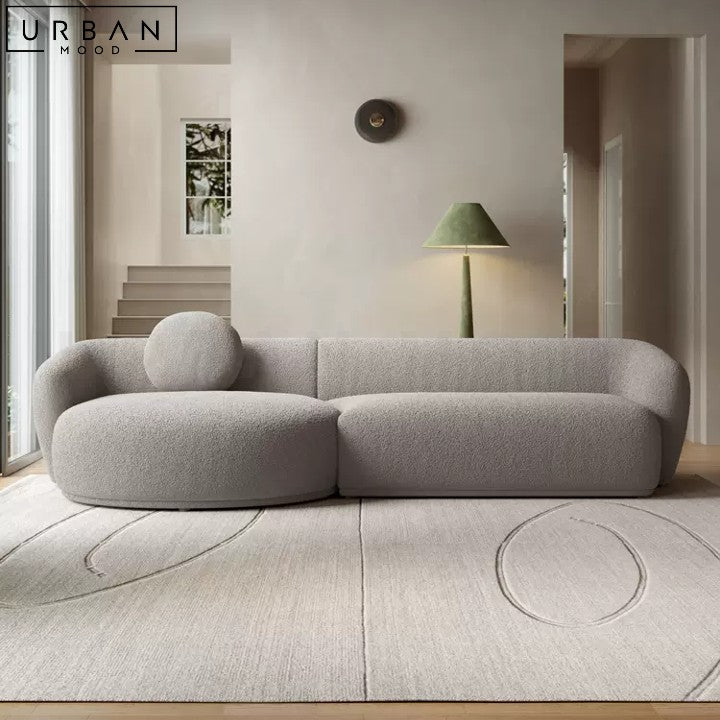
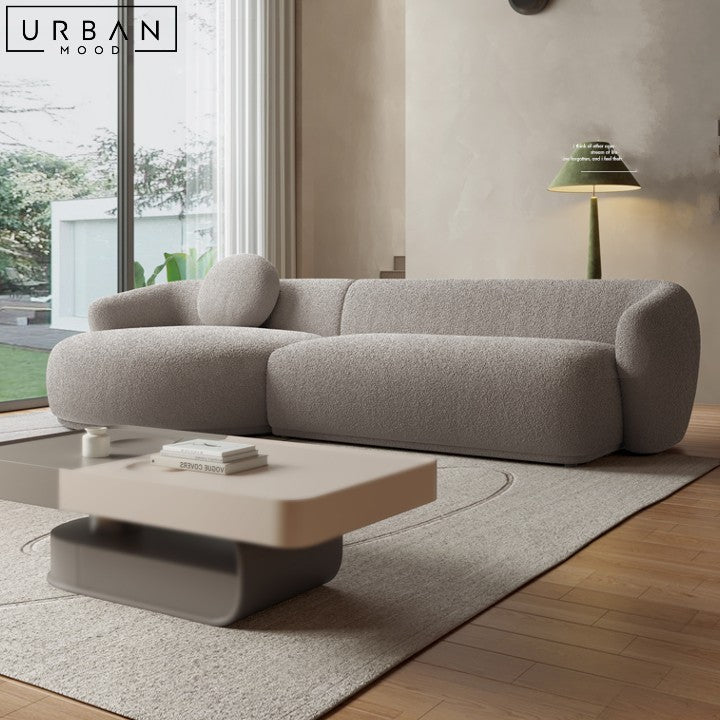
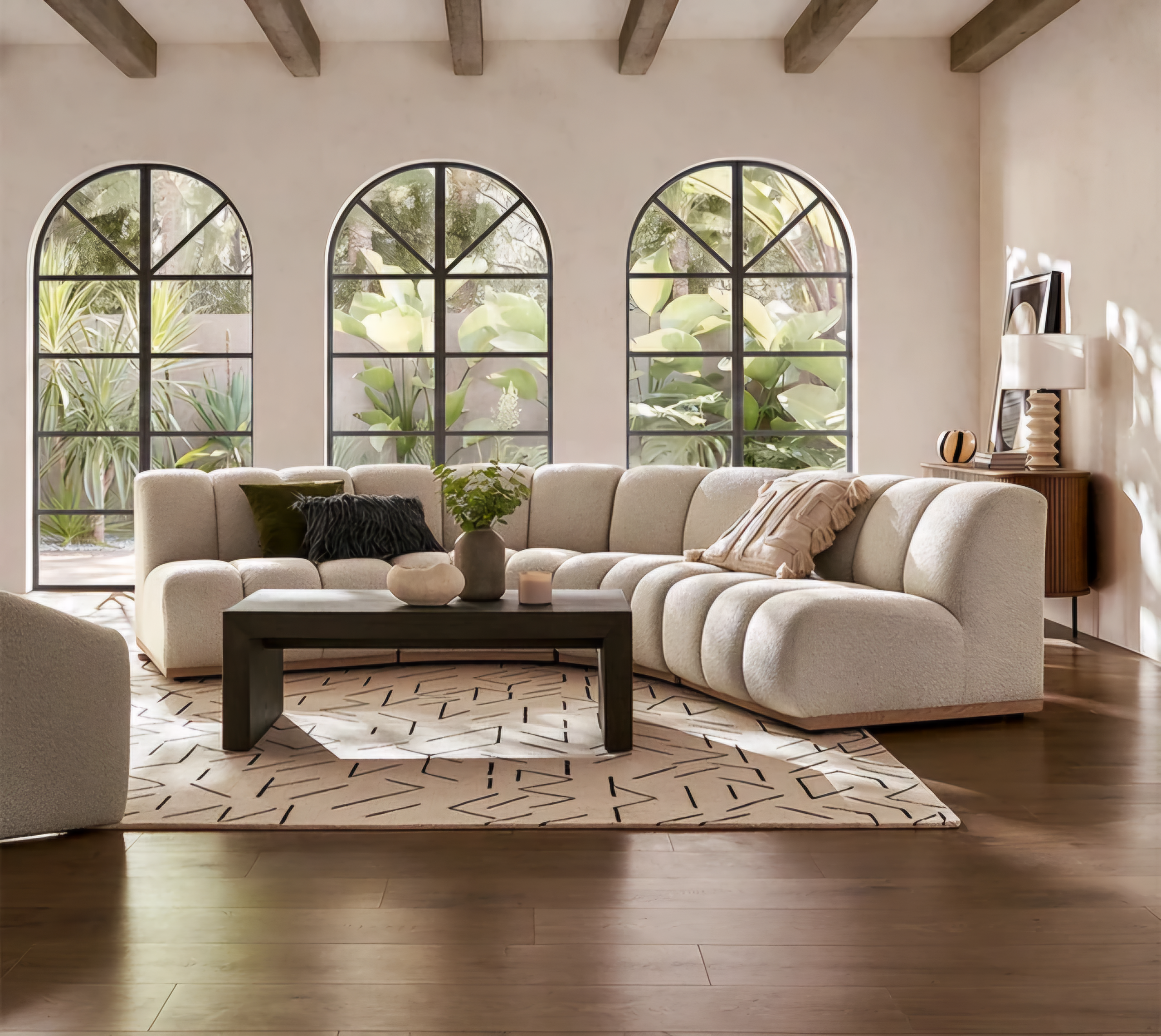
For comfort on a warm day, woven fabric usually feels better against the skin, and it suits the soft, textured look of Japandi and wabi-sabi living rooms. The downsides are spills, dust and, with natural fibres, the risk of mould or odour if the sofa stays damp.
- Look at the weave. Tightly woven synthetics such as polyester resist liquids better than loose, open weaves, giving you a few extra seconds to blot a spill.
- Think about texture. Looped fabrics like bouclé are soft and forgiving of wear but can snag on claws; our earlier piece on the bouclé revival covers the fabric in more detail.
- Vacuum weekly. Dust and skin cells collect in the weave, and humidity makes them harder to shift.
- Blot, do not rub. Rubbing pushes stains deeper. Check the cleaning code on the label before using any product.
Which sofa material suits your household?
- Young children: leathaire or a tightly woven, easy-clean fabric. Genuine leather also wipes clean but scratches show.
- Cats and dogs: leathaire marketed as pet-friendly or scratch-resistant. Avoid loose weaves and loops that catch claws.
- Little air-conditioning: woven fabric for the cooler feel. If you prefer leather, choose a good grade and keep the room ventilated.
- Sofa near a sunny window: any material can fade. Use sheer curtains, and keep leather and faux leather out of direct afternoon sun.
- A long-term purchase: full-grain leather on a solid wood frame, if you are happy to condition it a few times a year.
In a compact flat, depth matters as much as material: a deep sofa can crowd a 3-room or 4-room HDB living room, so measure the walkway in front of it first.

Urban Mood sofas to consider
These five cover each main material. Browse the full ranges in our fabric sofas and leather sofas collections, and check each product page for current options before ordering.
Woven fabric
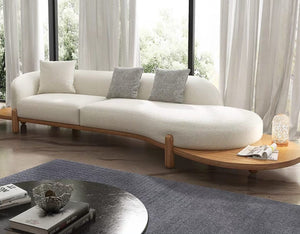
ZAYNE Japandi Fabric Sofa is a low-sitting, Japanese-style design in soft fabric upholstery, with a pine wood internal structure and legs and high-density foam infill for medium firmness. At 70cm, 120cm or 160cm long and 80cm deep, it is one of the more compact choices for a BTO or HDB living room, and colour customisation is available on request.
Leathaire
HORUS Scandinavian Sofa is upholstered in pet-friendly leathaire over high-density foam and is designed for cat-friendly homes. It is 96cm deep and comes in lengths from 120cm to 340cm, so it can work in a small study or a larger condo living room.
FINESS Modern Leathaire Sofa has a solid pine wood and high-density spring internal structure with high-density foam, and a firmness of 3 out of 5. Urban Mood lists it as low maintenance and suited to households with children or pets. At 74cm deep, it is slimmer than many sofas, which helps in a narrow living room. Colours include space grey, light grey, cream, coffee brown and forest green.
Genuine leather
MOCA Japandi Leather Sofa pairs genuine cowhide leather with 45D high-density foam, an ash wood frame and carbon steel legs. An adjustable headrest supports film nights, and its clean lines suit both Japandi and classic schemes. It comes in one- to four-seater sizes, 90cm to 280cm long and 97cm deep.
BOLAND Modern Genuine Leather Sofa uses full-grain cowhide leather, high-density foam cushions and an oak wood internal frame. Its angular shape suits contemporary condos and landed homes, and sizes run from a 125cm single seater to a 340cm 5.5-seater, 100cm deep. Colours include black, coffee, khaki, brown, grey and camel, with customisation available.
Frequently asked questions
Does a leather sofa get mouldy in Singapore?
It can if it sits in still, damp air. Keep a gap behind the sofa, ventilate or air-condition closed rooms, avoid plastic covers, and clean and condition the leather every few months.
Why is my faux leather sofa peeling?
Most faux leather has a PU coating that can break down through hydrolysis, which heat and humidity speed up. The coating then cracks and separates from its backing. Better-quality PU resists this for longer.
Is leathaire real leather?
No. Leathaire is a fabric designed to look and feel like leather. It is often chosen for homes with pets or children because it is generally easy to wipe clean.
Which sofa material is best for cats?
A leather-look fabric marketed as pet-friendly or scratch-resistant is usually the safest choice. Loose weaves and looped fabrics catch claws, and genuine leather shows scratches.
Choosing your sofa material
Choose for your household rather than the showroom. Pick full-grain or good-quality genuine leather if you want a long-lasting piece and will condition it; choose leathaire for an easy-clean leather look with children or pets; and go for a tightly woven fabric if comfort without air-conditioning matters most. Whatever you choose, keep air moving around the sofa and out of strong sun. You can compare options in our fabric sofa range and leather sofa collection.