

Japandi Dining Table Ideas for Singapore BTO Flats
In most BTO flats, the dining area is not a separate room. It sits between the kitchen and living room, on show all day. That is one reason Japandi has become such a popular choice for Singapore homeowners: its calm, pared-back look keeps a small open-plan space from feeling busy.
Getting it right takes more than buying a wooden table. This guide explains how to choose a Japandi dining table for a BTO or HDB flat, which materials are easy to live with, and how to style the area without it looking bare.

Quick answer: what makes a good Japandi dining table for a BTO flat?
Look for a simple silhouette, a natural or stone-look top in a muted tone, and a visible wooden base such as a pedestal, tapered legs or a sculpted frame. Size it to leave a clear walkway, choose a round or extendable table if space is tight, and keep chairs, lighting and décor in the same warm, neutral palette.
What is Japandi style in a dining room?
Japandi is a fusion of Japanese and Scandinavian design. Both traditions value simplicity, functionality and good craftsmanship, and the combined style is known for clean lines, natural materials and a neutral colour palette. From Japan it borrows restraint and an appreciation of natural imperfection; from Scandinavia it takes warmth and everyday comfort.
In a dining room, that translates into a few practical principles:
- Fewer, better pieces: one well-proportioned table and matching chairs rather than extra cabinets and décor.
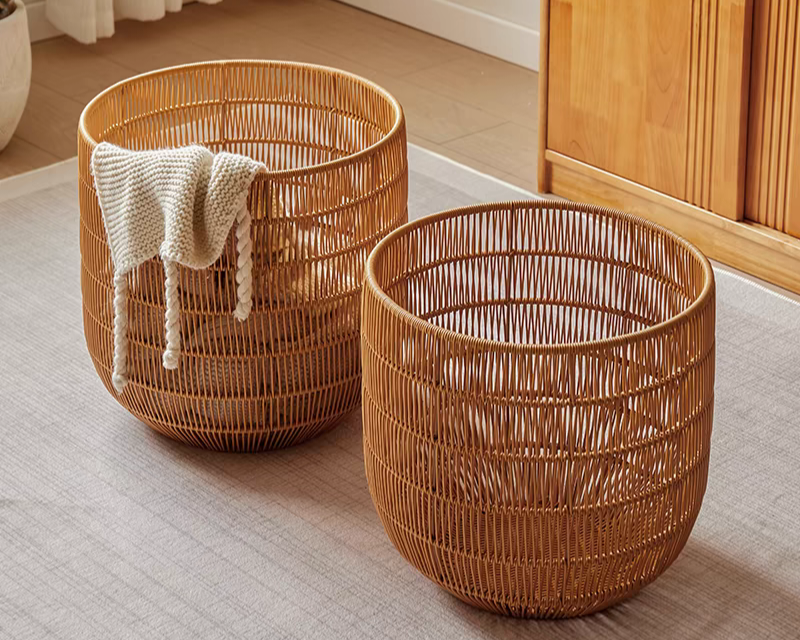
- Natural textures: wood grain, matte stone, rattan, linen and ceramics.
- Soft, earthy colours: cream, oat, taupe, warm grey and mid-to-dark wood tones.
- Visible structure: legs, bases and joinery that are part of the design rather than hidden.
Japandi overlaps with wabi-sabi interior design, but tends to be cleaner and more ordered, which suits a dining area used for daily meals.
How do you choose a Japandi dining table for a BTO?
Start with size, then shape, then materials. A table that blocks the route from the kitchen or main door will make the whole flat feel cramped, however attractive it looks.
What size Japandi dining table fits a BTO dining area?
Measure the space, allow for pulled-out chairs and a walkway, then work back to a table size, as explained in our guide to what size dining table fits a 4-room BTO. As a rough starting point, many couples and small families in 3-room and 4-room flats find a 120–140cm rectangular table or a 110–120cm round table comfortable for everyday use.
Should you choose a round or rectangular Japandi table?
Both suit the style. A round table softens a boxy HDB layout, has no corners to bump into on the way past, and makes conversation easy for four. A rectangular table fits neatly against a wall or along a window and is easier to extend for guests. If your dining area is squeezed between the kitchen and living room, a round pedestal table usually leaves more knee and walking room than a four-legged one.
Which base designs look most Japandi?
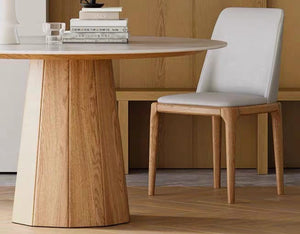
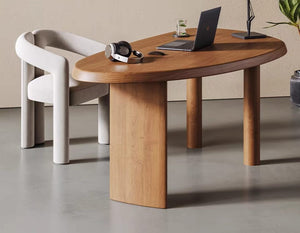
The base is where much of the character comes from. Look for solid wood or wood-finish bases with honest, simple forms: a single pillar, conical or tapered legs, or a sculpted hourglass or curved frame. Avoid high-gloss finishes and chrome, which pull the look towards glam or industrial styles.

Which tabletop materials suit a Japandi dining room in Singapore?
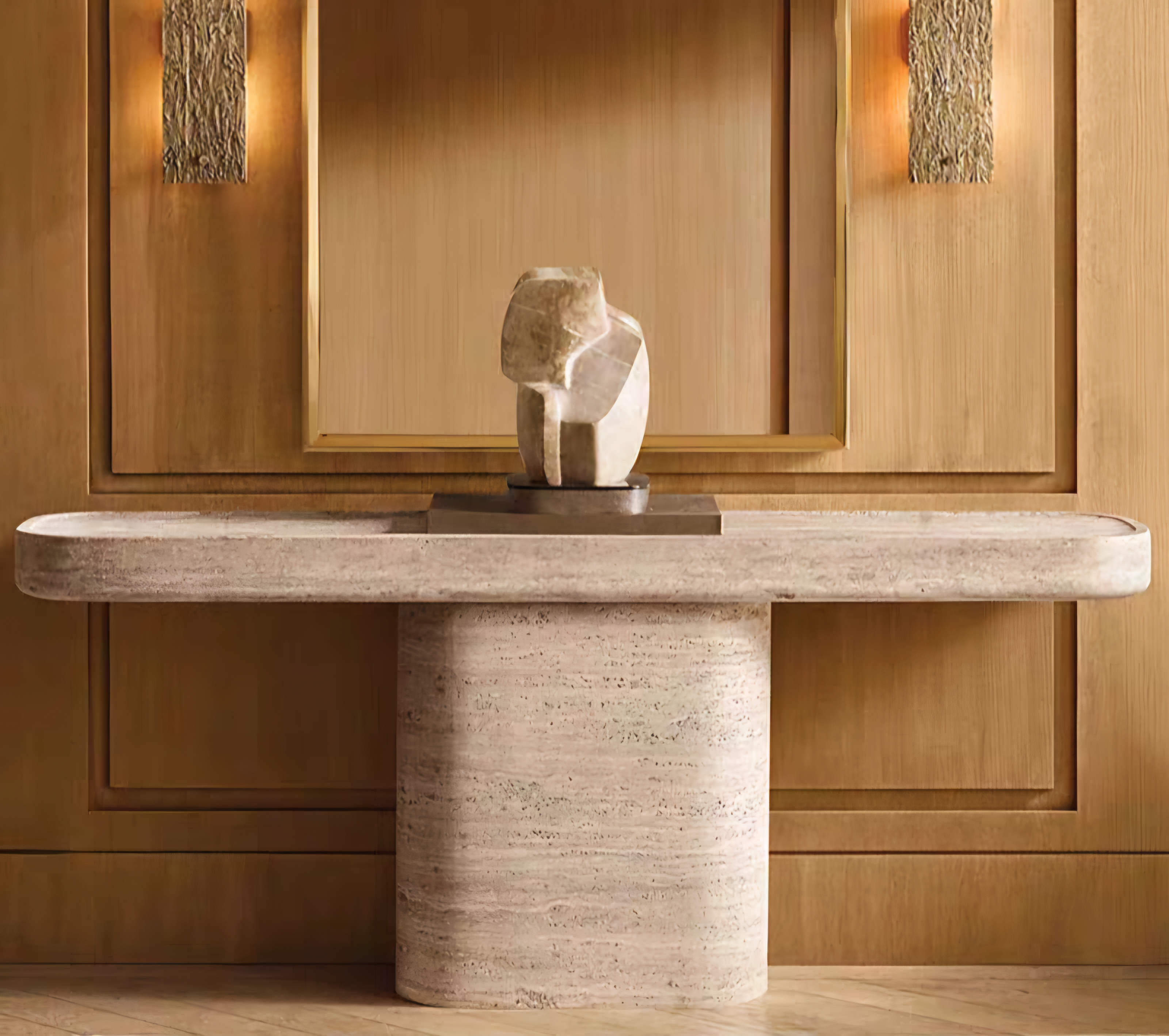
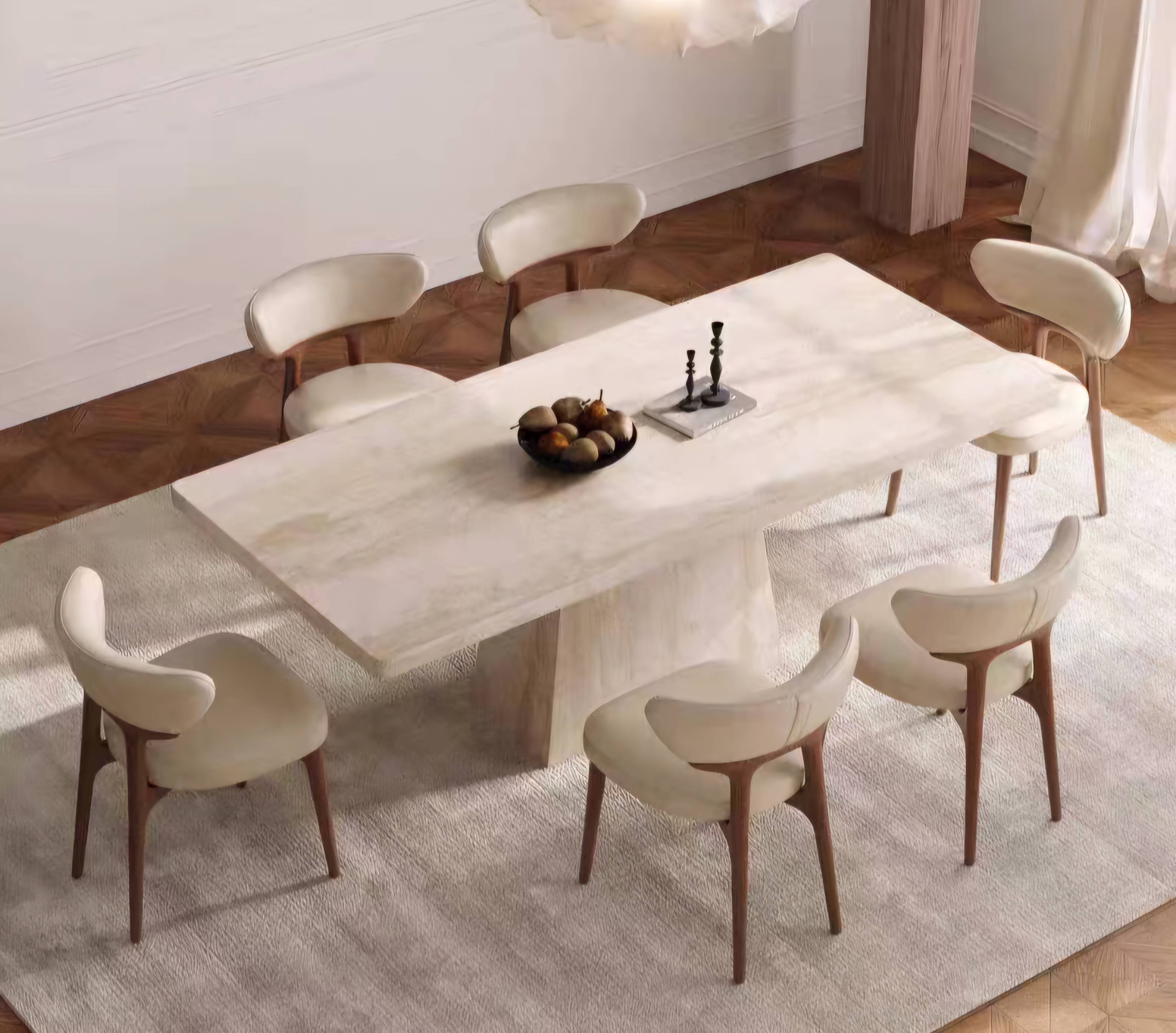
Japandi traditionally leans on wood, but stone-look tops have become a popular way to get the same calm, matte look with easier cleaning. Pairing a pale stone top with a warm wooden base is one of the most recognisable Japandi combinations.
| Pairing | Look | Everyday practicality | Works best in |
|---|---|---|---|
| Matte white sintered stone top, light wood base | Bright, airy and clean | Easy to wipe; protect edges from hard knocks | Smaller BTO dining areas that need to feel open |
| Earth-tone sintered stone top, dark wood base | Warmer and more grounded | Same easy-wipe surface in a deeper tone | Open-plan flats with walnut or teak accents |
| Solid wood top and base | Classic and tactile | Needs coasters and quick wiping of spills | Households happy with light, regular care |
Is a sintered stone top practical for daily family meals?
Usually, yes. Sintered stone is non-porous, so it does not absorb liquids or stains, and it is highly scratch-resistant in everyday use. Care guidance from furniture maker Harbour Lifestyle recommends cleaning it with warm water, a mild soap solution and a soft cloth, and avoiding abrasive scourers and powders. The same guide notes that the material is relatively brittle, so a sharp, heavy blow to an edge or corner can chip it. Placemats and trivets are sensible habits. For a deeper material comparison, see our guide to natural travertine and sintered stone dining tables.
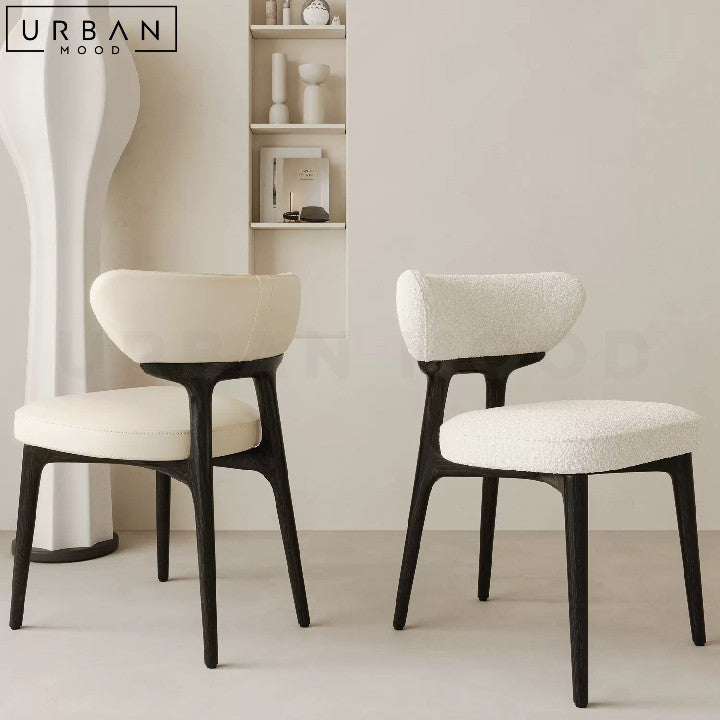
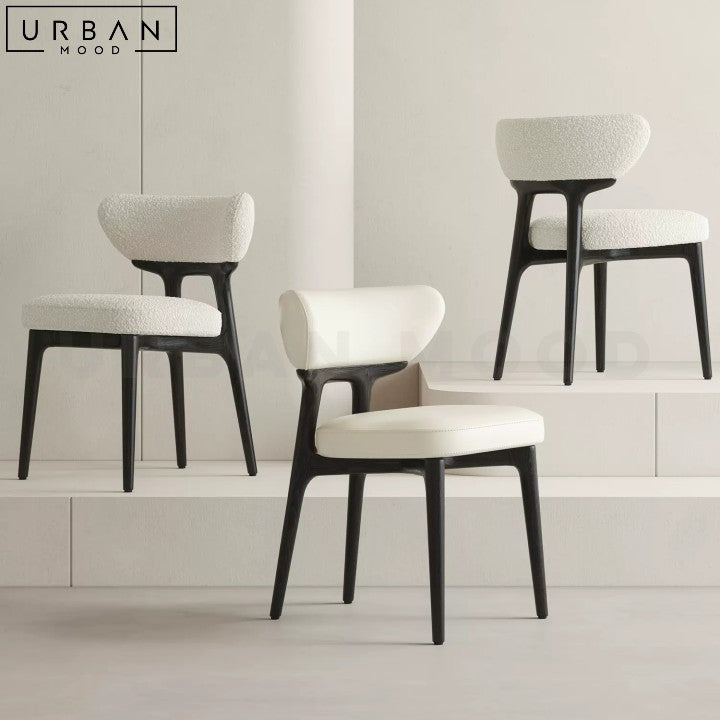
How should you pick Japandi dining chairs?
Chairs fill more visual space than the table, so aim for simple frames, gentle curves and natural finishes:
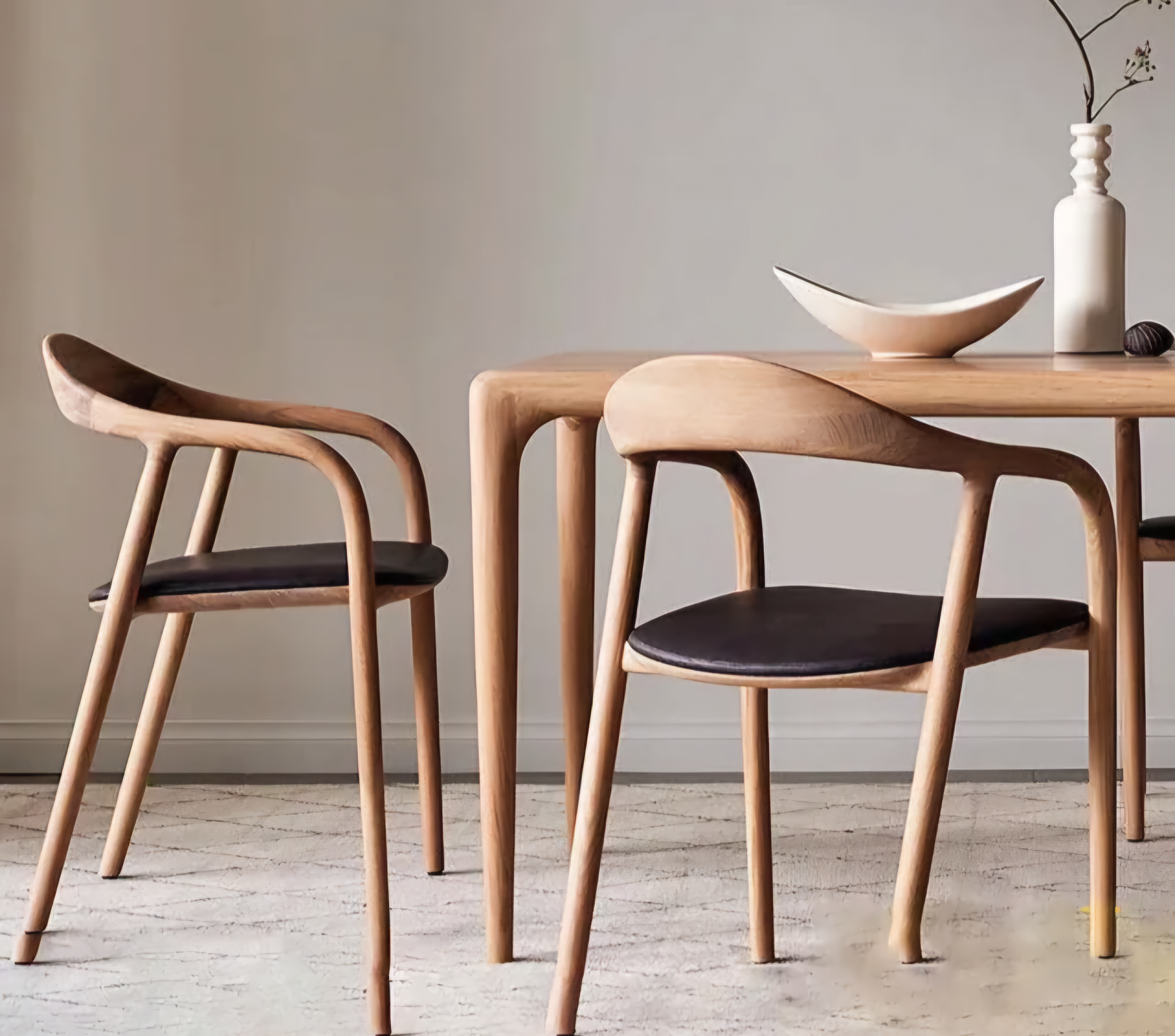
- Repeat the base tone: match chair wood to the table base, or go one shade darker for contrast.
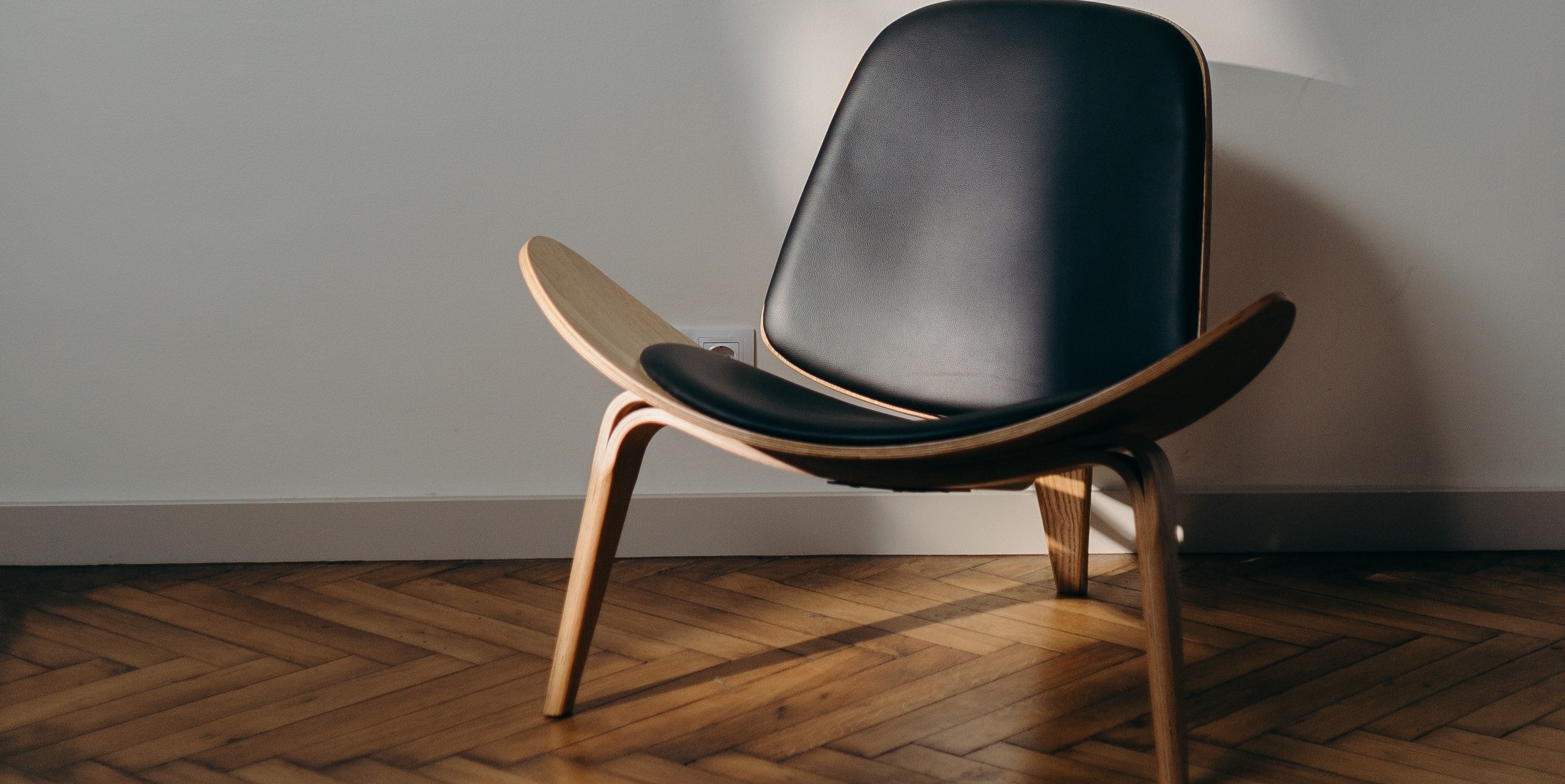
- Keep backs low or open: open or slatted backs let light pass through and make a small dining area feel less crowded.
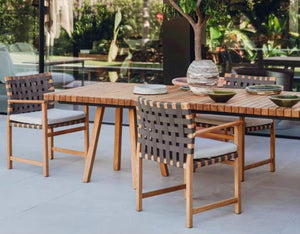
- Add one texture: a rattan panel, woven seat or linen cushion adds warmth without clutter.
- Check the footprint: compare each chair's width with your table length so chairs tuck in fully when not in use.
Mixing chairs with a bench works too, if the finishes match. Browse our dining chairs collection to compare frames and finishes.

How high should a pendant light hang over a Japandi dining table?
A paper, linen, rattan or matte ceramic shade gives the soft, diffused glow that suits Japandi better than bright downlights alone. Crate & Barrel and Lighting New York both suggest hanging a pendant about 30–36 inches (roughly 75–90cm) above the table in a room with a standard 8-foot ceiling, and slightly higher for taller ceilings.
For a round table, a single pendant centred over the middle usually looks best. For a longer rectangular table, consider two or three smaller pendants spaced evenly, or one linear pendant. A warm white bulb keeps wood tones natural in the evening.
How do you style a Japandi dining area without making it look empty?
The aim is calm, not bare. A few touches keep the space warm:
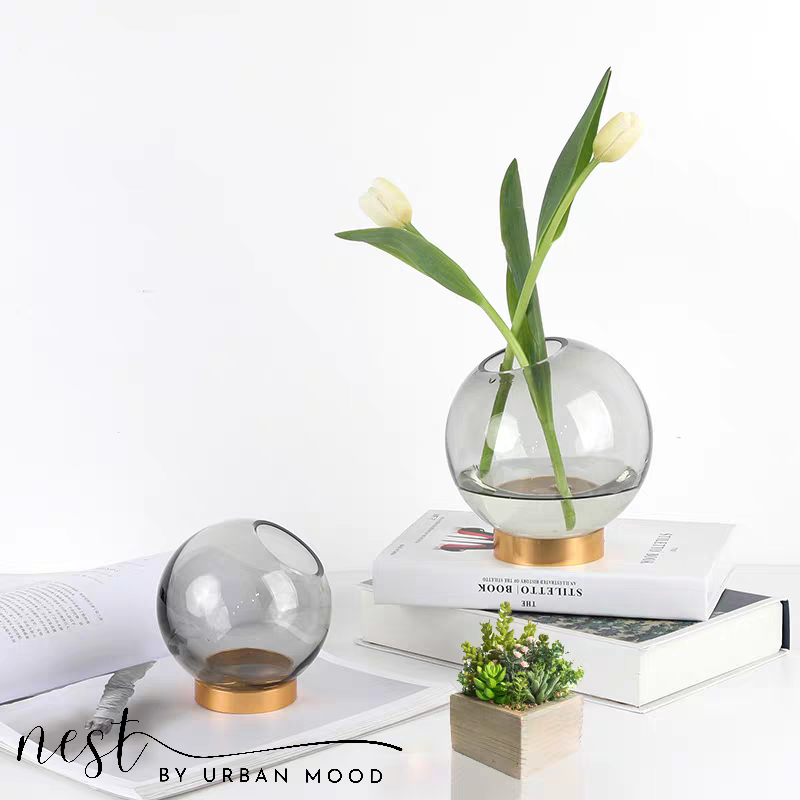
- One centrepiece: a single ceramic vase with a branch or dried stems, rather than several small objects.
- Natural table linen: a linen runner or placemats in oat, sand or charcoal.
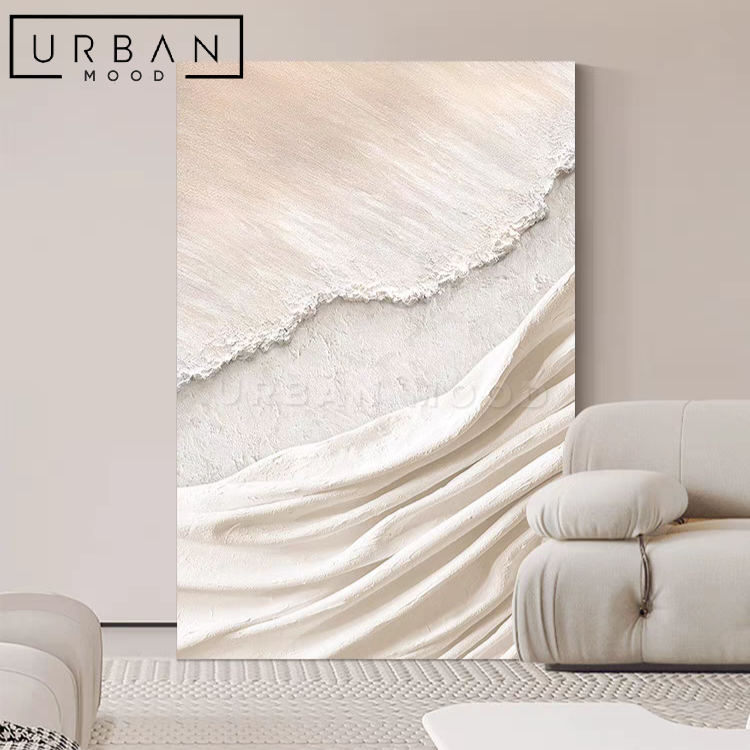
- A textured wall: limewash paint, a fluted panel or a single large artwork in muted tones.
- Clear surfaces: keep bills and chargers in closed storage, not on the table.
If your dining area shares space with the living room, keep the palette consistent across both zones. Our guide to furnishing a 3-room BTO living and dining area explains how to plan the two as one connected space.

Urban Mood Japandi dining furniture for BTO flats
These pieces come from our Japandi sintered stone tables and dining chair ranges. Check each product page for the full list of sizes and finishes.
KOZA Japandi Sintered Stone Dining Table
The KOZA Japandi dining table sets a sintered stone top on a solid ash wood hourglass-shaped base. It comes in compact sizes of 120cm by 70cm and 130cm by 70cm, as well as 140cm and 160cm lengths at 80cm wide, so it suits narrower BTO dining areas as well as larger 4-room and 5-room flats.
FRANZ Japandi Sintered Stone Round Dining Table
With a matte white sintered stone top and conical pine wood legs in a cherry wood finish, the FRANZ round dining table brings a warm contrast to a pale room. Diameters start at 110cm and go up to 180cm, and an optional lazy susan inlay is useful for shared dishes at family meals.
STRODE Japandi Round Sintered Stone Dining Table
The STRODE extendable round table pairs a matte white sintered stone top with a wooden pillar leg, and includes an extension mechanism for when you have guests. Diameters are 120cm, 135cm and 150cm, with a wood-colour or white base. See more space-flexible options in our extendable tables collection.
CADEN Japandi Solid Wood Dining Chair
The CADEN Japandi dining chair is made from beech wood with an ash wood veneer, and its clean lines suit Japandi, Scandinavian and wabi-sabi rooms. Its listed footprint is 52.5cm by 44.5cm, in wood, walnut or black finishes.
TOTT Japandi Rattan Dining Chair
For a touch of texture, the TOTT rattan dining chair has a gently curved multilayer board frame with a centre strip of synthetic rattan on the seat and backrest. It measures 44cm by 50cm and comes in black, walnut and cherry wood finishes, which pair well with the darker bases above.

Frequently asked questions
Is Japandi suitable for a small HDB dining area?
Yes. Japandi favours fewer pieces, open chair backs and light, natural colours, all of which help a compact dining area feel more spacious. Choose a table sized for your walkway and keep décor to a minimum.
What colours work best in a Japandi dining room?
Warm neutrals such as cream, oat, beige and taupe, balanced with mid or dark wood tones. Add small amounts of charcoal or black through chair frames, lighting or ceramics for definition.
Can I mix a sintered stone top with wooden chairs in a Japandi room?
Yes. A matte stone-look top with a wooden base and wooden chairs is a classic Japandi combination. Repeat the wood tone of the base in the chairs to tie the look together.
Can I get a Japandi look without replacing my dining table?
Often, yes. Swapping in chairs with natural wood or rattan finishes, a linen runner, a fabric or paper pendant and one ceramic centrepiece can shift an existing set towards Japandi.
Bringing it together
A Japandi dining room in a BTO flat comes down to a few deliberate choices: a well-sized table with a simple wooden base, chairs that echo its tones, soft lighting hung at the right height, and just enough natural texture to feel warm. Round and extendable tables help when space is tight. When you are ready to compare sizes against your measurements, explore our Japandi sintered stone dining tables or browse the wider round dining tables collection.